Featured Articles Blog

Sustainability gap: only one-fifth of execs are quantifying financial impact 0

Sustainability gap: only one-fifth of execs are quantifying financial impact

New KPMG research finds a disconnect between sustainability strategy and financial decision-making, leaving value at risk. 72 percent of executives understand their sustainability strategies but only 19% can quantify how it will impact their future performance Four in five companies are unable to measure how sustainability affects profits, cash flow or valuation, leaving risks and opportunities largely unpriced 60 percent say they factor sustainability into financial planning but very few can translate it into EBITDA, CapEx or balance sheet impacts Sectors leading on the use of advanced valuation methodologies include banking and capital markets (33 percent), energy and natural resources (31 percent), and automotive (27 percent)  Redmond, WA (July 10, 2026) – A significant gap remains between companies’ understanding of sustainability and their ability to translate it into financial value, according to a new global KPMG study. The study, Closing the Sustainability Valuation Gap, reveals that while 72% of executives say they understand their organization’s sustainability strategy, metrics and performance, only 19% apply robust quantification approaches to measure its financial impact, highlighting a critical disconnect at the center of corporate decision-making. Surveying over 2,000 executives across 19 countries and territories, the study finds sustainability is now firmly on the boardroom...

Eco-anxiety in the workplace: Beneva publishes guide for SMEs 0

Eco-anxiety in the workplace: Beneva publishes guide for SMEs

Quebec City, QC (June 30, 2026) – With climate change continuing to raise concerns, eco-anxiety is emerging as a key mental health issue in the workplace. Announced at the inaugural summit of Québec Capitale Climat in 2025, a study has since been conducted by the Université Laval’s Research Chair in Mental Health, Self-Management and Work, powered by Beneva. Based on responses from 2,020 employees and managers, this first large-scale analysis of SMEs reveals that environmental concern is high at 59.3 out of 100, while consequences on performance remain moderate at 28.7 out of 100. This gap provides a strategic window of opportunity to mitigate the negative effects on wellbeing and performance, especially since eco-anxiety has been added to the list of mental health risk factors in the workplace. At a recent business webinar on eco-anxiety in the workplace, the same conclusion was drawn by those in attendance: better understanding the issue is a step in the right direction. In addition to the phenomenon and the main findings of the study, it covered how this paradigm shift can serve as a catalyst for mobilization, discussion and sustainable engagement within organizations. “Eco-anxiety should not be seen solely as a risk, but as a sign...

New Statistics Canada report confirms extreme weather reshaping Canada’s home insurance market 0

New Statistics Canada report confirms extreme weather reshaping Canada’s home insurance market

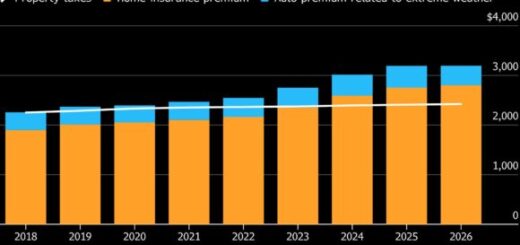
Insurance Bureau of Canada calls on governments to take immediate action on resilience Ottawa, ON (June 30, 2026) – A new report by Statistics Canada underscores a growing reality for Canadians: Extreme weather is fundamentally reshaping the country’s home insurance market, driving higher claims costs, contributing to increasing premiums and leaving too many households exposed to the risk of catastrophic damage from extreme weather. The study, “Extreme weather impacts on consumers and insurers in Canada, December 2019 to December 2025: An updated analysis,” finds that extreme weather events are becoming more frequent, more severe and more costly, placing sustained pressure on Canadian insurers and homeowners alike. Among the report’s highlights: Claims costs have surged dramatically. Since 2009, insurers have paid nearly $2 billion per year on average in catastrophic weather-related claims, up sharply from about $400 million annually between 1983 and 2008. In recent years, annual insured losses have reached unprecedented levels, including $3.4 billion in 2022 and a staggering $9.4 billion in 2024. Insurance premiums have increased faster than inflation in recent years, reflecting the growing cost of rebuilding homes and the escalating frequency of catastrophic events. “Natural disasters are reshaping the home insurance landscape for Canadians from coast-to-coast,”...

Ontario Home Insurance Premiums Rise 6.2% Year-Over-Year: Rates.ca Home Insuramap Report 0

Ontario Home Insurance Premiums Rise 6.2% Year-Over-Year: Rates.ca Home Insuramap Report

System backup and wind/hail put pressure on premiums as northern Ontario cities see the highest costs Toronto, ON (June 30, 2026) – Ontario home insurance premiums climbed 6.2% year-over-year in 2026 to $2,235, driven primarily by system backup (overwhelmed sewers, sump pumps or septic tanks), wind/hail damage and rebuild costs, according to the latest Rates.ca Home Insuramap report. The report draws on Rates.ca’s proprietary quoter data to measure estimated average premiums across Ontario cities and towns. An interactive map powered by data from a leading global insurance analytics provider displays peril risk scores across five categories at the neighbourhood and individual address level across 517 Forward Sortation Areas (FSAs – the first three characters of a postal code). “The biggest drivers of home insurance premium increases in Ontario are system backup and wind and hail damage,” said David Mayer, Director of Insurance and Underwriting, Rates.ca. “Neighbourhoods where multiple risks overlap often see premiums well above the provincial average. Every homeowner — or prospective homeowner — should understand their local risks so they can make informed decisions about their coverage, mitigating risk and protecting their homes.” Key Findings Cochrane topped the list of Ontario’s most expensive cities for home insurance, at $3,322...

0

Root Expands Its Telematics Car Insurance to New Jersey, Its 37th State

Article 0 Comments Technology-driven insurer Root has launched its behavior-based car insurance in New Jersey, marking its 37th state. Using mobile telematics, Root calculates its rates primarily on actual driving performance, such as focused driving, smooth braking, and gentle turns. The system can financially reward safe drivers. Safe drivers in New Jersey stand to realize potential annual savings of up to $1,300, according to the insurer. Driver onboarding, customized coverage selection, policy management, and claims routing are handled entirely through Root’s mobile application. “Expanding to New Jersey is a massive milestone in our state expansion strategy as we accelerate toward our goal of coverage in the contiguous U.S. by 2027,” said Alex Timm, founder and CEO of Root. “By entering the Garden State, we’re expanding our reach to a market historically characterized by limited consumer choice. Our ability to scale our behavioral pricing model demonstrates the efficiency of our technology and positions us to capture more market share.” Root said it plans to further expand to Wyoming, Massachusetts, North Carolina, Michigan, Idaho, and Maine pending regulatory approvals. Root said it plans to expand its independent agent distribution channel to 100,000 eligible producers. Appointments can be made in 24 hours. Root...

The rise of the AI-empowered policyholder: What it means for insurance leaders 0

The rise of the AI-empowered policyholder: What it means for insurance leaders

By the ReSource Pro Editorial Team — For decades, insurers and intermediaries controlled most of the information flow in the insurance relationship. Policyholders relied on agents, adjusters, and carriers to interpret coverage, explain options, and guide decisions. That dynamic is beginning to shift. In a recent article published by The Insurance Lead, the concept of the AI-empowered policyholder takes center stage, highlighting how consumer access to artificial intelligence is reshaping expectations, behavior, and the balance of knowledge in insurance interactions. This shift matters because AI is no longer confined to carrier systems or broker platforms. Policyholders now have direct access to tools that can summarize policies, compare coverage, question exclusions, and generate follow-up questions in seconds. The result is a more informed customer who expects faster, clearer, and more collaborative engagement from insurers and their partners. When Information Asymmetry Disappears Historically, insurance operated on information asymmetry. Professionals understood policy language, underwriting logic, and claims processes far better than customers. AI tools are rapidly narrowing that gap. Policyholders can now upload documents, ask nuanced questions, and receive explanations that would have previously required an expert intermediary. This does not mean AI replaces professional judgment, but it does change the starting point...

0

Chubb Q2 Net Income Down 3.8% on ‘Overly Soft’ Large Account, E&S Property

Article 0 Comments Second quarter 2026 net income at insurer Chubb was down 3.8% compared to the same period in 2025 to about $2.85 billion, with property/casualty underwriting income up 18.8% to about $1.9 billion. Pretax net catastrophe losses were $475 million compared to Q21 2025 losses of $630 million. The P/C business ended Q2 2026 with a combined ratio of 83.8 compared with 85.6 the year prior. Consolidated net premiums written (NPW) increased 3.6% to about $14.7 billion. P/C net premiums were up 3% to about $12.8 billion. NPW decreased 2.3% in North America commercial. Without large account and E&S property, NPW was up 4.1% in Q2. Looking at major accounts retail and E&S wholesale, NPW was down 9% in Q2. Chubb said NPW would be up 0.4% excluding large account and E&S property. The combined ratio for Q2 for North America commercial finished at 85.4 compared with 83.5 for Q2 2025. Chubb said 1.9 points were attributed to higher catastrophe losses. In a statement, CEO Evan G. Greenberg said “overly soft underwriting conditions persist in certain areas of property insurance globally, particularly large account and E&S related.” “We will not underwrite knowingly to a loss,” he continued, adding...

0

Marsh Reports 6% Revenue Increase in Q2, as Reinsurance Unit Sees 2% Decline

Article 0 Comments Insurance broker Marsh reported consolidated revenue of $7.4 billion during the second quarter, an increase of 6% over Q2 2025, or 5% on an underlying (organic) basis. Q2 operating income increased 4% to $1.9 billion, while net income attributable to the company was $1.3 billion. Earnings per share during the second quarter were $2.63, compared with $2.45 in Q2 2025. For the six months ended June 30, 2026, consolidated revenue was $15.0 billion, an increase of 7% on a GAAP basis, or 4% on an underlying (organic) basis, compared to the prior-year period. Marsh’s Risk and Insurance Services (RIS) segment (comprising Marsh Risk and reinsurance broker Guy Carpenter) reported Q2 revenue of $4.8 billion during the second quarter of 2026, an increase of 4%, or 3% on an underlying (organic) basis. Operating income increased 2% to $1.5 billion in Q2, while adjusted operating income increased 3% to $1.7 billion. RIS’ revenue for the six months ended June 30, 2026 was $9.9 billion, an increase of 5%, or 3% on an organic basis. Marsh Risk and Guy Carpenter Marsh Risk’s revenue in the second quarter of 2026 was $4.1 billion, an increase of 6%, or 4% on an...

Beneva rolls out new initiatives to support individuals living with cancer 0

Beneva rolls out new initiatives to support individuals living with cancer

A comprehensive approach combining human support and social commitment Quebec City, QC (June 29, 2026) – A cancer diagnosis often comes as a shock, disrupting every aspect of a person’s life–personal, family, professional, as well as day-to-day routines. Fully aware of the challenges faced by those affected and their loved ones, Beneva is strengthening its efforts to provide more tangible and compassionate support throughout their journey. Expanded coverage to better support individuals undergoing treatment As part of this commitment, Beneva is expanding its oncology coverage to better meet the needs of individuals undergoing treatment. As of September 1, cooling caps used during chemotherapy treatments will be covered for all group insurance plans at no additional cost, under the therapeutic devices clause. By helping to reduce hair loss, these treatments offer comfort and relief to those affected, further reinforcing Beneva’s commitment to improving quality of life. Practical tools to assist members and workplaces In addition, Beneva has developed a self-service toolkit designed to support the overall well-being of plan members and their loved ones. It includes practical information and resources to help better support individuals affected by cancer. A workplace health toolkit focused on cancer has also been created to equip employers...

0

NYC Reports 3 Deaths From Legionnaires’ Disease; Cooling Tower Cleaning Underway

Article 0 Comments New York City officials are reporting that three people have died and eight people are currently hospitalized due to the outbreak of Legionnaires’ disease on the Upper East Side. More than 60 cases have been reported since the first cases were identified on July 2. The affected area encompasses the neighborhoods of Carnegie Hill and Yorkville (ZIP codes 10028, 10128, and 10075). Last week, the New York City Health Department said the number of new cases appeared to be slowing. After the city tested the cooling towers of all 183 buildings in the affected neighborhoods, it began requiring owners of all towers with positive initial results in a PCR (polymerase chain reaction) screening to immediately drain, clean, and disinfect their cooling towers to reduce the risk of further exposure. On July 13, health officials reported that 57 addresses with cooling towers that tested positive have completed the cleaning while 19 are in the process of doing so. In addition to the PCR screening tests, a culture test is also being conducted for all sampled cooling towers. Culture tests take up to two weeks for results and will confirm which cooling towers had live Legionella bacteria growing at...